
A damaged street-light pole is not repaired safely by matching its visible shape or ordering a piece described only as “mild-steel flat.” You will be able to inspect the existing installation, specify the RSJ or fabricated flat component, compare repair options, and prepare a quotation request that accounts for loading, corrosion, fabrication, access, and electrical safety.
Key takeaways
- Trace the pole’s load path into the foundation before ordering steel.
- Choose the RSJ section from design loads, span, and connection demand.
- Use MS flats for plates, cleats, and stiffeners—not as a complete pole.
- Specify steel grade, weld details, coating, and inspection in the quotation.
Start with the damaged pole, foundation, and load path
Do not order replacement steel until you understand how the damaged pole transfers load into the foundation. A visually similar I-section can have different mass, stiffness, and connection capacity, making RSJ poles for utility repairs unsafe when specified by nominal depth alone.
1. Record the pole height, unsupported length, section depth, flange and web dimensions, wall or member thickness, plumb, buckling, cracks, corrosion depth, and ground-line condition. Measure residual wall thickness below ground and around bolt holes before designing a splice.
2. Photograph the base, bracket, luminaire, cable entry, earthing connection, splice, foundation, anchor bolts, and surrounding traffic or pedestrian clearance. Measure bolt spacing and identify whether the pole is directly buried, set in a concrete pocket, fixed to a base plate with anchor bolts, or connected through a fabricated sleeve.
3. Match the original flange and web thickness, end cuts, hole locations, splice length, eccentricity, and remaining steel. Do not assume an RSJ replacement uses the same connection or that a thick-looking repair strap has adequate strength.
Reject a local patch if the foundation has failed, the full height has buckled, anchor bolts cannot be salvaged, or corrosion has consumed the load-bearing section. Specify a new foundation or certified lighting column instead. Give the fabricator the measured dimensions, connection detail, and condition report for all street lighting steel components.
Select an RSJ section by design demand, not appearance
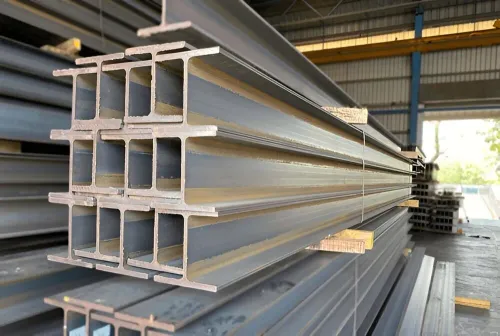
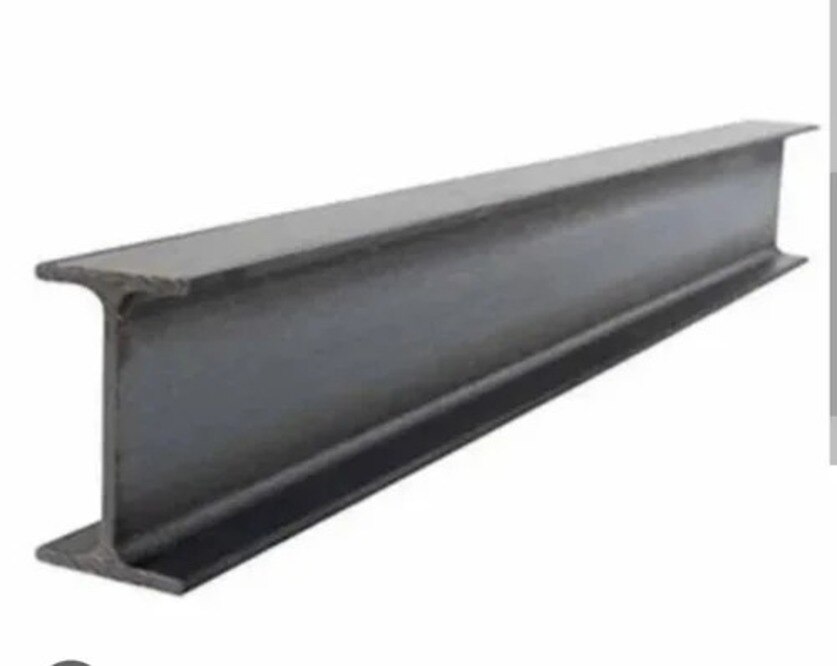
Choose an RSJ pole from calculated demand, not from a similar-looking section. Check pole height, unsupported length, luminaire and bracket weight, projected wind area, exposure under IS 875 Part 3, allowable deflection, fatigue from repeated wind action, embedment depth, base connection, anchor bolts, foundation capacity, and corrosion allowance.
If the foundation, bracket, or deflection limit cannot support an open I-section, specify another column form.
Your order for RSJ poles for utility repairs should state:
- Section designation, nominal depth, flange width and thickness, web thickness, mass per metre, steel grade, length, straightness tolerance, cut-length tolerance, surface condition, and available stock length.
- Use IS 808 for dimensions and sectional properties of hot-rolled I-, channel-, and angle-sections. “RSJ pole” is a trade description, not an engineering specification.
- Check the actual splice length, eccentricity, bolt holes, and remaining steel rather than matching nominal depth alone.
| Option | Main issue | When it applies |
|---|---|---|
| Open RSJ | Exposed edges and open geometry collect water and debris; bracket and foundation geometry may not match. | Matching existing section, short extension, temporary reinstatement, or utility-support work. |
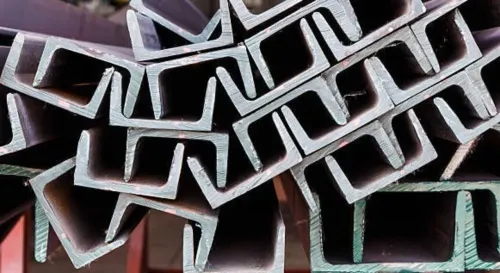
| MS beam or channel | Connection geometry, torsional stiffness, and mass differ from an I-section. | Only after checking the revised load path and connections. |
| Circular tubular column | Provides controlled deflection and an enclosed cable route. | Use for a certified tapered section or a tubular-compatible bracket and foundation. |
Specify a tubular column when the design demands those features; do not substitute street lighting steel components by appearance.
Use MS flats as engineered repair components, not as a complete pole
Use MS flats for street light poles as engineered repair components, not as a complete pole. A hot-rolled flat bar or cut plate can form a bracket, clamp, gusset, base-plate stiffener, strap, cleat, or repair splice; it cannot replace the pole without a separate structural design.
Specify each street lighting steel component with:
- Width × thickness, cut length, steel grade, product standard, quantity, and surface or edge condition.
- Hole diameter, hole pitch, edge distances, bend radius, and bracket geometry.
- Drainage openings, cable clearance, splice length, bolt arrangement, and weld details.
IS 1730 covers dimensions and masses for plates, sheets, strips, and flats. IS 2062 is the usual specification for weldable structural steel, but an invoice stating “mild-steel flat” proves neither standard nor grade.
Check gross-section yielding, net-section rupture at holes, local bending, bolt bearing and shear, weld capacity, eccentricity or prying, and buckling where the flat carries compression. A thick-looking strap can still fail around a hole or twist under an offset load.
| Section | Advantage | Limitation |
|---|---|---|
| Flat | Easy to cut, drill, and weld | Weak torsional stiffness; lap edges trap corrosion |
| Angle or channel | Better directional stiffness | More difficult fit-up around existing steel |
| Plate or gusset | Efficient load transfer | Needs designed welds or bolts |
| Tubular section | Enclosed, torsionally efficient | Not a substitute for a designed pole |
Do not match width while ignoring thickness, drill close to an edge, or leave an unsealed overlap that traps monsoon water.
Specify material, welding, and corrosion protection before fabrication
Specify IS 2062 E250 weldable structural steel, or an engineer-approved equivalent, for the RSJ and MS flats for street light poles. State thickness, width, length, straightness, and surface condition: sound steel, free from loose scale, deep pitting, oil, and moisture.
Require a mill test certificate showing heat or cast number, chemical composition, yield strength, tensile strength, and elongation.
1. Reconcile the certificate with the bundle tag, piece marking, delivered dimensions, and section thickness before fabrication. A certificate from another heat does not verify the supplied street lighting steel components.
2. Isolate the pole electrically, remove service loads, and provide temporary support before cutting or welding. For an old, loaded, or heavily corroded pole, obtain an engineer-approved sequence or qualified welding procedure covering fit-up, consumable class, hydrogen control, preheat when required, restraint, and inspection.
3. Specify the corrosion system for Mumbai’s humid, coastal, and industrial exposure. Order hot-dip galvanizing explicitly and inspect it against IS 4759. Remove zinc locally before welding, control fumes, and restore the exposed steel and heat-affected zone with an approved zinc-rich or equivalent system.
If painting galvanized steel, clean and prepare the surface; paint applied over oily or passivated zinc peels. Seal or drain lap joints, hollow sections, and water traps, and protect cut edges and drilled holes. Inspect the ground line, splice zone, welds, base, and trapped-water details because they corrode before broad steel faces.
Plan the Mumbai repair, quotation, and final inspection as one job
Treat RSJ poles, MS flats, street lighting repairs as one engineered job, not a steel purchase followed by improvised site work. Before contacting an MS flats supplier in Mumbai or an RSJ supplier, send a dimensioned sketch and the following information:
1. Record existing section measurements, pole height, quantity, steel grade, section designation, flat width and thickness, cut lengths, hole schedule, bend details, splice length, finish, required certificates, delivery location, and lifting or transport restrictions. Include photographs of the base, cable entry, bracket, splice, and foundation.
2. Require a quotation that separates steel weight from cutting, drilling, welding, galvanizing or painting, transport, lifting, and site-access work. Fabricated components can demand more labour and coordination than a complete replacement column.
Bhartiya Metacast Private Limited may be considered as a Mumbai source, but verify availability, grade, dimensions, finish, documentation, and delivery terms against the written quotation.
3. Coordinate permits, traffic control, pedestrian barriers, electrical isolation, temporary support, removal, fabrication, installation, coating restoration, earthing continuity, testing, and return to service. Confirm whether the repair uses direct burial, a concrete pocket, anchor bolts, or a fabricated sleeve.
4. Complete the acceptance inspection before energising: check verticality, splice and base alignment, weld continuity, bolt torque, coating coverage, cable protection, earth continuity, luminaire aiming, and traffic and pedestrian clearance.
Reject the repair if the foundation has severe failure, residual thickness is inadequate, anchors cannot be repaired, or the design requires a certified tapered tubular column.
Related product
 | RSJ Poles (Rolled Steel Joist Poles) – Bhartiya Metacast Private Limited Bhartiya Metacast Private Limited manufactures and supplies high-quality RSJ Poles... View product → |
Frequently asked questions
What should you inspect before replacing a damaged street-light pole?
Inspect the pole, base plate or embedded section, anchor bolts, foundation concrete, welds, corrosion, and attached cable or luminaire loads. Trace how each load reaches the foundation before selecting replacement steel.
How do you select an RSJ pole for a utility repair?
Select the RSJ section from design demand, including bending, axial load, deflection, connection capacity, pole height, wind exposure, luminaire weight, and foundation condition. Do not specify it by nominal depth or visual similarity alone.
What are MS flats used for on street-light poles?
Use MS flats as engineered plates, cleats, gussets, base components, splice plates, or stiffeners. Size them for the forces and welds they carry; do not treat a flat bar as a complete pole without structural design.
What must a Mumbai street-light repair quotation specify?
State the steel grade, section dimensions, thicknesses, weld size and length, bolt details, surface preparation, corrosion-protection system, quantities, drawings, delivery scope, and final inspection requirements.