
Mumbai’s monsoon wetting, salt-laden air, condensation and trapped water can start corrosion at beam ends, connections and concealed surfaces before damage is visible across the member. You will be able to establish an inspection baseline, identify early corrosion, measure section loss, clean and recoat steel correctly, and recognise when a structural engineer must design the repair.
Key takeaways
- Record steel grades, coating details, dry-film thickness and inaccessible areas at handover.
- Inspect beam ends, connections, ledges and water traps before visible rust spreads.
- Measure section loss with ultrasonic thickness readings instead of judging corrosion by colour.
- Remove salts and moisture before recoating, then escalate concealed or connection damage.
Create a Baseline and Follow a Mumbai-Specific Inspection Schedule
Set the baseline immediately after installation. Record each member’s identification and steel grade, connection details, coating manufacturer and batch, surface-preparation standard, primer, intermediate and topcoat, dry-film thickness, photographs, and areas that cannot be reached. Without this record, you cannot tell whether later coating failure began during construction.
For MS beams after installation in Mumbai, use this schedule:
- Before the first monsoon, inspect exposed surfaces, beam ends, underside flanges, connections, weld toes, coating holidays, water traps and areas behind cladding.
- After the first monsoon, repeat the inspection and compare photographs, rust staining, blistering and drainage performance with the baseline.
- After year one, inspect exposed or coastal members at least annually; use a six-month interval where rust is active, drainage is poor or the beam carries a critical load.
- Inspect after flooding, fire, vehicle impact, major alteration work or removal of cladding.
During each examination, check beam ends inside masonry pockets, concrete, or fire-rated enclosures for moisture entry, rust staining, cracking, displacement, lost bearing and distortion. Specify opening-up or ultrasonic thickness measurements when sightlines are inadequate.
At bolted joints, look for missing or loose bolts, packings, fretting, elongated holes, corrosion beneath washers and connection cracking. Do not tighten high-strength bolts casually with an impact wrench; use the specified installation method and calibrated pretension verification, or obtain engineered instructions for replacement or modification.
Find Corrosion at Beam Ends, Connections and Water Traps
Start at places that stay wet after rain: beam ends at bearing seats, underside flanges, end plates, splice plates, stiffener corners, bolt lines, weld toes and horizontal ledges. In Mumbai, chloride deposits, persistent humidity and monsoon wetting keep these areas damp longer than exposed faces.
A mild steel beam for maintenance in Mumbai needs closer attention there, not just a walk-by glance at the web.
| Location | Visible sign | Immediate response |
|---|---|---|
| Beam ends, bearing seats and base plates | Orange rust, damp staining or flaking scale | Clear standing water and trace the leak or blocked drain |
| Bolted or welded connections | Rust lines, blistered paint, packed scale or corrosion around bolt holes and weld toes | Photograph, clean only loose deposits and arrange a closer examination |
| Horizontal ledges, stiffeners and concealed gaps | Mud, salt crust, trapped water or expanding rust jacking plates apart | Remove the moisture source; do not seal or drill the area without engineering review |
Blistered paint means corrosion is active beneath the coating, while flaking scale exposes steel to faster attack. Deep pits, rust bleeding from a joint, visible thinning, distorted plates or a newly opened gap require prompt attention; do not hide them under fresh paint.
Inspect interfaces with stainless steel, aluminium, copper-containing parts or wet masonry separately. Dissimilar metals can create galvanic corrosion, and crevices can corrode without broad surface rust. Check for damaged isolation washers, failed sealant and water held behind cladding. A fire-resistive coating needs its approved repair system, not ordinary anticorrosion enamel.
Measure Section Loss Instead of Judging Rust by Appearance
A thin orange film on intact steel is usually a coating and surface-rust problem, not proof that the beam has lost meaningful capacity. Pitting, flaking scale and measurable thinning are different: rust occupies more volume than the steel it consumed, so a thick crust can conceal serious section loss.
Treat these findings as reasons to measure rather than judge by colour:
- Deep pits or grooves on the flange, web, web-to-flange corner or bearing seat.
- Thinning around bolt holes, end plates, splice plates or weld toes.
- Rust jacking that lifts a connection plate, cracks surrounding concrete or pushes apart a fitted joint.
- Repeated rust staining from a beam end inside masonry, a fire-rated enclosure or another inaccessible pocket.
Map each affected patch, record its length and width, and remove loose scale before measurement. Use calibrated ultrasonic thickness equipment to record the remaining steel thickness at the deepest pits and across unaffected reference points. A surface that looks lightly rusted can still fail this check.
For reliable MS beam care, give the thickness map, member identification, connection details and photographs to a structural engineer. The engineer must compare the measured section with design demands and connection capacity, including bolt bearing and weld capacity.
Do not weld a doubler plate, splice or stiffener over corroded steel as routine maintenance; load transfer, weldability, residual stress and temporary propping require a designed repair.
Clean, Prepare and Recoat Steel Without Trapping Moisture
Protect an installed mild-steel beam by removing salt and rust, drying the steel, applying a compatible coating system, and eliminating the water causing corrosion. Maintaining steel beams through Mumbai’s monsoons requires drainage work, not repeated repainting alone.
1. Record the member identification, steel grade, connection details, coating manufacturer and batch, preparation standard, coating products, applied dry-film thickness, photographs, and inaccessible areas before work begins.
2. Test old paint for lead and other hazardous constituents before abrasive blasting or heating. Set up containment, respiratory protection, dust control, and compliant waste disposal from the test results.
3. Wash away salt, pollution, and bird deposits, then allow the steel to dry fully. Scrape loose scale and coating; abrasive-blast or mechanically prepare remaining rust to the specified standard, feathering sound paint edges and removing dust.
4. Prime exposed steel within the product’s stated recoat window. Use compatible intermediate and topcoats, and apply them only within the manufacturer’s temperature, humidity, and dew-point limits.
5. Check dry-film thickness with a calibrated gauge under a defined sampling plan. Take extra readings at edges, welds, corners, and repair patches; ISO 19840 provides procedures for rough steel surfaces.
6. Clear blocked drains, fix leaking roofs and pipes, remove standing water from horizontal surfaces, and seal approved crevices. Never drill drainage holes, cut stiffeners, or seal beam ends without structural-engineer approval.
Repair intumescent or other fire-resistive coating only with its approved compatible system; ordinary enamel can invalidate the protection.
Escalate Concealed, Connection and Structural Repairs Correctly
Stop routine MS beam care when damage affects load transfer, section capacity, or a concealed area you cannot inspect reliably. For MS beams after installation in Mumbai, obtain engineered advice immediately when you find:
- A beam end, flange, web, bearing seat, or connection with deep pitting, measurable thinning, perforation, or a suspected crack.
- A loose or missing bolt, elongated bolt hole, fretting marks, corrosion beneath washers, or cracking around a bolted joint.
- A separated weld, cracked weld toe, distorted plate, displaced beam, unusual deflection, or new vibration.
- Persistent water trapped behind cladding, inside a splice gap, or around a stiffener where the steel cannot be dried and examined.
Do not tighten high-strength bolts with an impact wrench. If pretension is specified, the engineer must define the installation method and calibrated verification procedure; a replacement bolt or connection redesign may be necessary.
Map suspected section loss and measure remaining thickness with calibrated ultrasonic equipment. A structural engineer must compare those readings with design demands and connection capacity. Rust scale alone cannot prove that a beam remains safe.
Never weld a doubler plate, splice, or stiffener over corroded steel as a maintenance shortcut. Load transfer, weldability, residual stress, and temporary propping require design. Do not drill drainage holes, cut stiffeners, or seal beam ends without review.
Give the engineer the member ID, steel grade, drawings, coating records, and photographs; suppliers such as Bhartiya Metacast Private Limited can then help match replacement MS sections to the approved repair design.
Related product
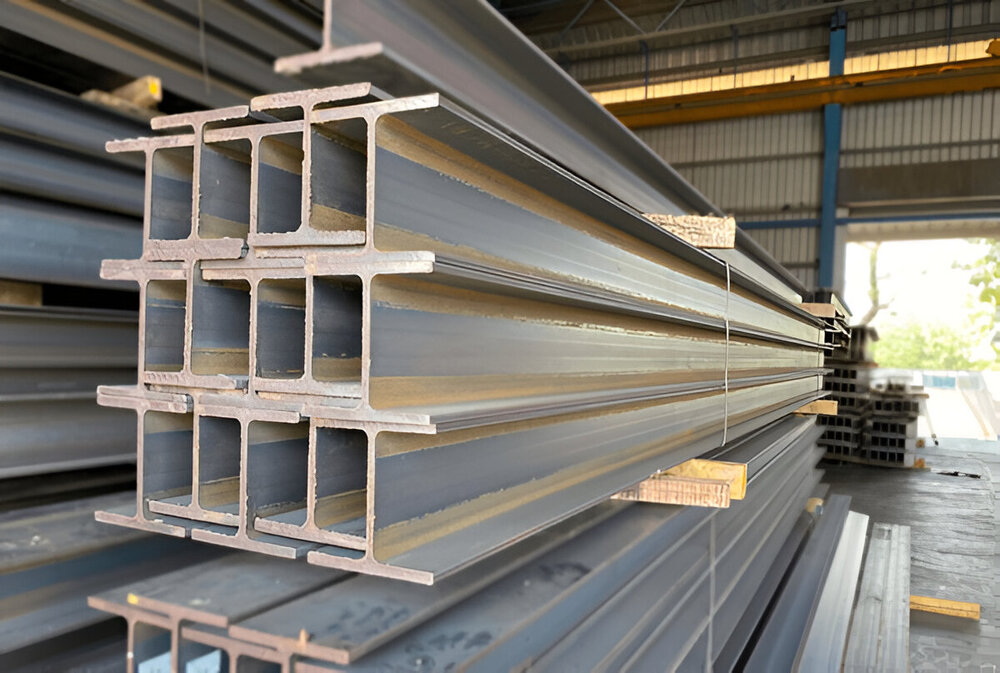 | MS Beams (Mild Steel Beams) – Bhartiya Metacast Private Limited Bhartiya Metacast Private Limited offers premium quality MS Beams (Mild Steel Beams)... View product → |
Frequently asked questions
What records should you create after installing mild steel beams in Mumbai?
Record each member’s identification, steel grade, connection details, coating manufacturer and batch, surface-preparation standard, primer, intermediate coat, topcoat, dry-film thickness, photographs and inaccessible areas.
Where should you look first for corrosion on installed MS beams?
Inspect beam ends, bolted and welded connections, ledges, stiffeners, gaps, drainage points and other locations that trap rainwater, condensation or construction debris.
How do you measure corrosion-related section loss in a mild steel beam?
Use ultrasonic thickness measurements at documented grid points and compare them with the original design thickness or handover records. Do not estimate section loss from rust colour or surface texture.
How should you prepare a corroded mild steel beam before recoating?
Remove loose rust, salts, oil and debris; prepare the surface to the specified standard; confirm it is dry; and apply the primer, intermediate coat and topcoat within the coating manufacturer’s recoat limits.
When should beam damage be escalated for structural repair?
Escalate concealed corrosion, significant section loss, damaged welds or bolts, distorted members, cracked connections and corrosion that affects beam ends or load-transfer areas to a qualified structural engineer.