
The better section depends on how the machine frame carries force: across a span, through a mounting point, around a bracket, or through a twisting load path. By comparing bending stiffness, torsion, deflection, vibration, connection details, and fabrication effort, you can select a section that works on the drawing and in the workshop.
Key takeaways
- Choose an MS channel for stronger beam action across a span.
- Choose an MS flat for plates, tabs, brackets, shims, and compact parts.
- Check bending direction, deflection, torsion, buckling, and connection details.
- Specify dimensions, steel grade, tolerances, surface condition, and inspection documents.
When an MS Channel Is the Better Load-Carrying Section
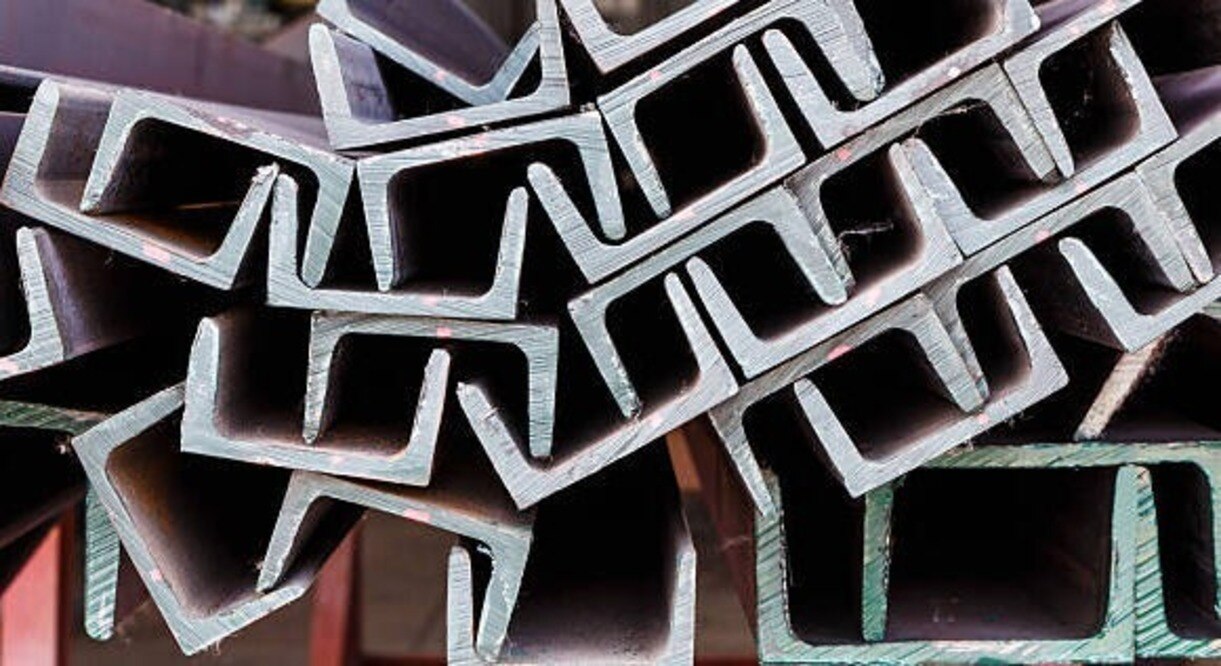
Choose an MS channel when a machinery member must carry load across a span and bending stiffness matters more than minimum steel weight. Its web and flanges place material away from the strong-axis neutral axis, so it usually outperforms a flat of similar mass as a beam or support rail.
That makes MS channels for machinery useful in base skids, guards, guide supports, and cross-members.
| Section | Load-carrying advantage | Main warning | Good fit |
|---|---|---|---|
| MS channel | High strong-axis bending stiffness and convenient continuous support | Open, unsymmetrical shape can twist under eccentric loading | Long beams, rails, uprights, and frame supports |
| MS flat | Simple solid section with easy cutting, drilling, and welding | Low edgewise stiffness and poor torsional rigidity | Short brackets, tabs, gussets, wear strips, and mounting plates |
| Closed box | High torsional rigidity and balanced load response | More difficult to inspect, drain, and weld without distortion | Frames exposed to twisting or vibration |
Do not select the best steel section for machinery from yield strength alone. For a channel used as a compression member, check web and flange local buckling, overall flexural buckling, and flexural-torsional buckling; gross area is not enough for a slender upright.
Also locate the load line: because the channel’s shear centre usually differs from its centroid, a centred-looking attachment can still introduce twist.
For vibrating equipment, compare assembled-frame stiffness and natural frequency, not static strength alone. Choose a channel when its strong-axis stiffness controls deflection and you can restrain twist with bracing, gussets, diaphragms, or an opposed channel.
When an MS Flat Is the Better Engineering Part
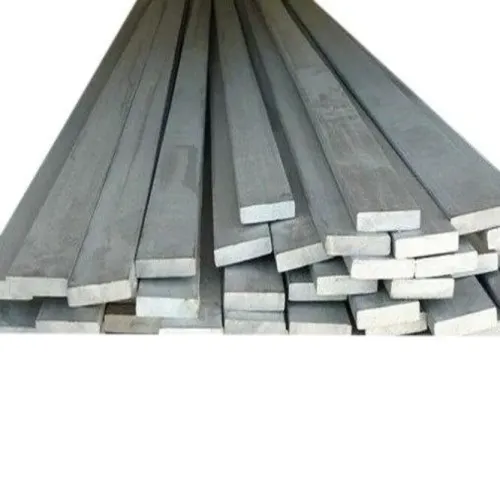
A flat works better when the component needs a broad, solid face for drilling, milling, slots, or direct mounting. Its rectangular section gives tools clear access from both sides and avoids the internal corner of a channel, where a cutter, weld torch, or fastener may be difficult to position.
Choose precision-finished stock when a bearing or alignment face matters; hot-rolled flat stock can arrive with mill scale, rounded edges, residual stress, and looser dimensional control.
Choose the flat for these machinery components:
- Mounting plates that carry bearings, motors, sensors, or clamps
- Gussets, tabs, and brackets fitted into tight spaces
- Clamp plates and wear strips that need a continuous contact face
- Short members loaded edge-on, where their depth and bending axis provide adequate stiffness
MS flats for engineering are also easier to trim, notch, drill, and weld into small assemblies without closing off access. That convenience can reduce fabrication time, especially when a channel would require end closures, access holes, or extra plates around its hollow-looking trough.
Do not select a flat merely because it is easier to fabricate. A long flat member can deflect or twist under a span load, while a channel places more steel away from the neutral axis and usually delivers greater bending stiffness for similar weight.
For MS channels or MS flats for machinery exposed to vibration, compare the assembled frame’s stiffness and natural frequency; add gussets, diaphragms, or a closed section when a flat lacks torsional rigidity.
Compare Bending Direction, Deflection, and Torsion Before Choosing
The best steel section for machinery depends on the load path, not steel weight alone. For MS channel vs MS flat, compare the bending axis, deflection, torsional stiffness, and vibration response before choosing.
| Section | Bending and deflection | Torsion and vibration | Best use |
|---|---|---|---|
| MS channel | Its web-and-flange geometry gives high strong-axis moment of inertia and section modulus, so it limits bending over a long span efficiently. Check M/Z for stress and EI for deflection. | The open shape has weak torsional rigidity and an eccentric shear centre; it can rack or twist under offset loads. | Base frames, rails, skids, and beams carrying loads across a span |
| MS flat | Its stiffness depends heavily on orientation. For a rectangular flat, I = bh³/12, so placing it edge-on can make it far stiffer than laying it flat. | A solid flat still has poor torsional efficiency when thin, and vibration can expose its flexibility at long spans. | Tabs, plates, gussets, wear strips, clamps, and short edge-loaded brackets |
| Closed box | A fabricated box usually resists torsion and racking better than either open section. | Weld distortion, internal access, drainage, and inspection become additional concerns. | Twisting frames or vibration-sensitive supports |
For a vibrating machine, compare assembled-frame stiffness and natural frequency, not static strength alone. Add gussets, diaphragms, or a second opposed channel when these provide a better load path than simply increasing flat-bar thickness. Choose the channel when strong-axis deflection governs; choose the flat when space, bearing area, or edge-on orientation governs.
Check Connections, Buckling, Weld Access, and Machine-Space Limits
A section that survives the bending calculation can still fail at its connection, weld, or installation envelope.
In an MS channel vs MS flat decision, check how forces enter the steel, not only the section modulus: a channel flange can bend around a bolt group, while a flat can buckle edge-on or crush beneath a concentrated load.
- Check bolt lines and bearing areas. A channel joint needs checks for flange bending, bolt eccentricity, web crippling, and access for tightening; designing only for gross bolt tension or shear can leave the connection unsafe.
- Check compression stability. Long channels can buckle globally between supports, while their unsupported web or flange can buckle locally near brackets and load points. A flat loaded edge-on has little lateral stability unless you provide guides, gussets, or closely spaced restraints.
- Check the weld path before choosing MS channels for machinery. The inside corner can block a torch, electrode, or inspection tool, and welding one-sided access can produce incomplete fusion. Continuous welds can also pull a channel out of alignment through distortion.
- Check the space around the part. A channel’s open side needs clearance for tools, fasteners, cables, and cleaning; its trough can retain coolant, chips, and abrasive dust. Add drain holes or seal ends where fluid accumulation would promote corrosion.
- Check machining requirements. A flat offers simpler drilling, slotting, and full-width mounting contact, but hot-rolled stock can have mill scale, rounded edges, residual stress, and poor dimensional control for precision fits.
If torsion governs, neither open section is automatically suitable; a closed box may fit the load better, provided you can weld, inspect, and coat it properly.
Specify and Source the Section for the Actual Machine Build
Specify the section by its load path, not by nominal size. Give the supplier the grade, channel or flat dimensions, length, governing standard, cut tolerance, straightness requirement, and whether the part will be welded, machined, drilled, or painted.
Ask for these details before placing the order:
- State the steel grade, such as IS 2062 grade E250, and request the material test certificate with heat number, chemical analysis, and mechanical results.
- For hot-rolled channels, check the designation, web depth, flange width, thickness, radius, and mass against IS 808 where that standard governs the section.
- For MS flats for engineering, specify width, thickness, length, edge condition, and dimensional tolerance; IS 1730 may govern dimensions for structural and general engineering flats.
- Confirm mill scale, rust, lamination, rounded edges, camber, and visible surface damage before fabrication.
- Require traceability from each delivered piece to its heat number, especially for load-bearing frames and safety-critical guards.
MS channels or MS flats for machinery should be compared against the assembled design, including deflection, both-axis inertia, torsional stiffness, buckling length, weld access, drainage, and vibration frequency.
A supplier such as Bhartiya Metacast Private Limited becomes useful when it can confirm section dimensions, documentation, cut lengths, and stock availability rather than merely quote a nominal size.
| Section | Verify at receipt | Reject or resolve when |
|---|---|---|
| Channel | Web, flanges, radius, straightness | Twist, buckling damage, blocked drainage |
| Flat | Width, thickness, edges, flatness | Laminations, severe scale, inconsistent thickness |
Frequently asked questions
When is an MS channel better for machinery?
An MS channel is better when a member spans between supports and needs bending stiffness, load capacity, or a rail-like support shape. Its web and flanges place steel away from the strong-axis neutral axis.
When is an MS flat better for engineering parts?
An MS flat is better for plates, tabs, brackets, shims, straps, mounting pieces, and compact parts where thickness and width suit the load and available space.
What should you compare between an MS channel and an MS flat?
Compare bending direction, section stiffness, deflection, torsional resistance, weight, connection method, buckling risk, weld access, and the machine’s space limits.
What details should you specify when sourcing a steel section for machinery?
Specify the section dimensions, steel grade, length, dimensional tolerances, straightness, surface condition, quantity, cutting requirements, and required material test or inspection documents.