
An RSJ support for a machine must carry more than the machine’s listed weight: vibration, torque, impact, maintenance activity, piping, and foundation reactions all enter the design. By the end, you will be able to identify the loads, section properties, connection checks, and purchasing details needed to judge whether an RSJ pole is suitable for an equipment-support frame.
Key takeaways
- Trace machinery loads through connections, sections, bases, foundations, and soil.
- Check axial force, bending, shear, torsion, buckling, deflection, and connection reactions.
- Specify section size, steel grade, length, holes, plates, finish, and inspection documents.
- Use a different support when vibration, corrosion, slenderness, or foundation limits govern.
How RSJ Poles Carry Loads from Industrial Equipment
An RSJ pole transfers machinery load through a continuous path: the machine feet or equipment frame deliver force into a cap beam or connection, the hot-rolled I-section carries axial force, bending, shear, and torsion, and the base connection passes the resulting reactions into the foundation. The foundation then spreads those forces into the supporting soil.
Design RSJ poles for machinery from the equipment supplier’s load schedule, not dead weight alone. Include:
- Static machine weight and operating loads
- Motor torque, starting and stopping forces, and unbalanced rotating forces
- Impact, belt or chain pull, and loads from attached piping or conveyors
- Maintenance personnel, lifted components, wind, seismic action, and thermal movement
A vertical reaction can become a bending moment when the machine load sits away from the pole centreline. The pole also needs lateral and torsional restraint; an unrestrained compression flange can cause lateral-torsional buckling before the section reaches its simple bending resistance.
For a pole acting mainly in compression, effective length, end restraint, unsupported height, radius of gyration, crookedness, and load eccentricity govern buckling capacity.
The base is part of the load path. Engineers check the base plate, welds, anchor-rod tension and shear, grout bearing, concrete breakout, and foundation reactions together. Simply welding an RSJ to a plate does not prove that the connection can transmit the machine’s forces.
Vibration requires a separate check of natural frequency, damping, lateral stiffness, torsional stiffness, and anchorage against the machine’s excitation range.
What Engineers Check Before Selecting an RSJ Section
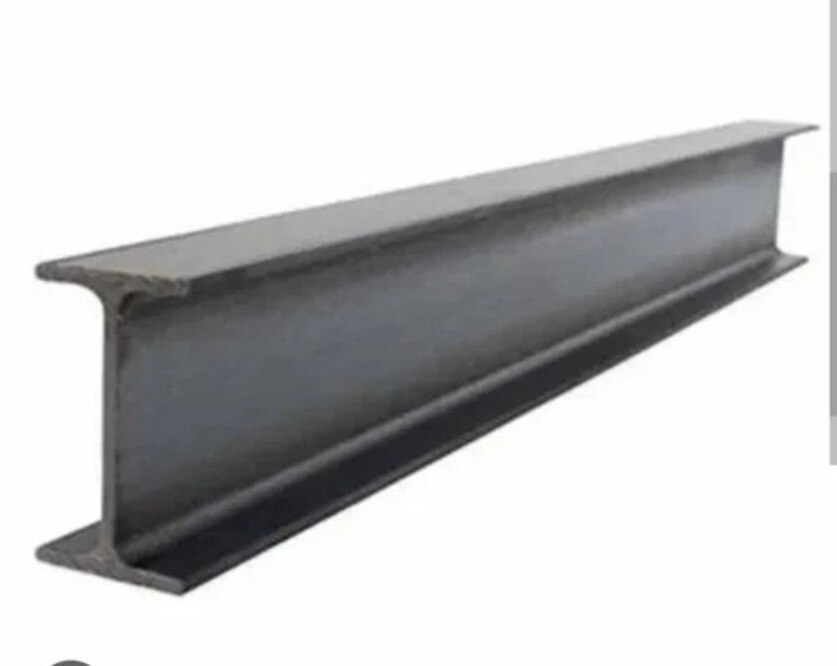
The deciding dimensions are section depth, flange width and thickness, web thickness, mass per metre, required height, and unsupported length. Identify the hot-rolled I-section against IS 808; the trade term industrial RSJ poles does not establish its size, steel grade, or load capacity.
Start with the equipment supplier’s load schedule. Include dead weight, operating and maintenance loads, motor torque, starting and stopping forces, impact, unbalanced rotating forces, belt or chain pull, attached pipework, conveyors, wind, seismic action, and lifted components. Calculate axial force, shear, bending moment, torsion, and foundation reactions for each load combination.
Engineers then test the section and its restraints:
| Check | What engineers verify | Failure if missed |
|---|---|---|
| Section resistance | Major-axis bending, shear, axial compression, and combined actions | Yielding, excessive shear, or interaction failure |
| Stability | Effective length, end restraint, radius of gyration, crookedness, and buckling curve | Overall buckling before crushing |
| Lateral restraint | Compression-flange restraint and distance between restraints | Lateral-torsional buckling of an unrestrained beam |
| Local capacity | Flange and web slenderness, bearing, crippling, and load introduction | Local flange or web failure |
| Serviceability | Vertical and lateral deflection, torsional stiffness, natural frequency, damping, and machine excitation range | Excessive movement or damaging vibration |
| Base connection | Base plate, welds, anchor-rod tension and shear, grout bearing, concrete breakout, and eccentric moment | Connection failure despite an adequate steel section |
The final selection must also satisfy the specified deflection limits and provide a credible load path into the foundation. A larger section cannot compensate for missing anchorage or inadequate restraint.
Where RSJ Poles Fit in Equipment-Support Frames
RSJ poles suit equipment bases, machine platforms, maintenance platforms, pipe racks, conveyor supports, mezzanine frames, service gantries and bracing systems. In Indian practice, “RSJ pole” usually means a hot-rolled I-section used as a post, column or beam; identify its dimensions and mass against IS 808, not by the trade term alone.
| Support option | Where it fits | Main limitation |
|---|---|---|
| RSJ pole | Steel columns, beams and braced frames carrying equipment and platform loads | An unrestrained beam can suffer lateral-torsional buckling; eccentric machine loads also introduce torsion |
| RHS or SHS section | Compact posts and frames needing similar stiffness about both axes | Internal surfaces are difficult to inspect, coat and repair after fabrication |
| Reinforced-concrete column | Heavy, low-vibration foundations and permanent equipment rooms | Changes, penetrations and connection adjustments are slower than with bolted steel |
| Welded plate box or truss | Long spans, high torsion or unusual load paths | Fabrication, inspection and corrosion protection require more work |
Choose an RSJ when its open shape provides the required bending strength, axial capacity and connection access without excessive weight. Provide lateral restraint to the compression flange where the design requires it; a beam that passes a simple vertical-load check can still buckle or twist.
Do not compare options using machine dead weight alone. Compare their stiffness, natural frequency, torsional resistance, anchorage and maintenance access against operating forces, impact, belt pull, piping loads and lifted components. An RSJ frame is a poor choice when those demands require a closed section, concrete mass or a specially stiffened support.
How to Specify Hot Rolled Steel RSJ Poles in Mumbai
A purchase order that says “industrial RSJ pole” is incomplete. Specify the section, fabrication scope, protection system, and documents so a quotation cannot be mistaken for a certified equipment-support assembly.
1. Identify the rolled section by its IS 808 designation, nominal depth, flange and web thicknesses, mass per metre, overall length, steel grade, and cut-length tolerance. Two sections with the same nominal depth can have different bending and buckling capacities.
2. State the design and fabrication details: axial load, bending moment, effective length, end restraint, holes or slots with their diameter and locations, end preparation, base plates, welded stiffeners, weld size, weld quality, and required non-destructive testing. Include packing and lifting points if the poles arrive fabricated.
3. Define Mumbai’s exposure conditions, especially for exposed sites near marine or industrial atmospheres. Specify surface preparation, such as abrasive blasting to Sa 2½ under ISO 8501-1, the coating system and dry-film thickness, or hot-dip galvanizing to IS 4759; also require treatment of cut edges and welds, drainage details, and an inspection or maintenance interval.
Paint over mill scale is not an adequate coating system.
4. Require mill test certificates showing the heat or cast number, chemical analysis, mechanical results, grade, and applicable standard. Ask for welding procedure records, consumable details, preheat requirements, dimensional inspection reports, and coating or galvanizing records.
When sourcing hot rolled steel RSJ poles in Mumbai, give the rsj pole manufacturer in mumbai this complete schedule. Bhartiya Metacast Private Limited can then quote against a defined section and scope rather than an unspecified “pole.”
Related product
 | RSJ Poles (Rolled Steel Joist Poles) – Bhartiya Metacast Private Limited Bhartiya Metacast Private Limited manufactures and supplies high-quality RSJ Poles... View product → |
When an RSJ Pole Needs Extra Design or a Different Support
A basic RSJ-pole arrangement is the wrong starting point when service conditions add dynamic, environmental, thermal, or stability demands that a simple vertical-load check does not capture.
- Vibration: Obtain the machine’s operating-speed range and excitation forces. Redesign the frame if its natural frequency is close to operating frequency, or if lateral stiffness, torsional stiffness, damping, or anchorage is inadequate. A support can pass static strength checks and still fatigue or resonate.
- Corrosion: Treat exposed poles near Mumbai’s coast, chemical plants, or humid process areas as a protection problem. Specify surface preparation, coating layers, cut-edge and weld treatment, drainage, and inspection intervals; paint applied over mill scale is not an adequate system. Use galvanizing or a qualified coating system when the exposure demands it.
- Temperature: Recheck steel strength, connection capacity, and thermal expansion for hot pipes, furnaces, exhaust equipment, or cold-service systems. Add sliding or guided connections, thermal insulation, fire-rated protection, or a different support material where movement or reduced strength governs.
- Eccentric loading: Include torsion, base-plate moment, anchor-rod tension, grout bearing, concrete breakout, and weld forces. An unrestrained compression flange can trigger lateral-torsional buckling before the section reaches its major-axis bending resistance.
- Fire protection: If the required fire rating exceeds the bare steel section’s performance, design tested encasement or intumescent protection, including access for inspection. Choose another system when protection thickness, temperature exposure, or maintenance access makes the RSJ arrangement impractical.
Frequently asked questions
How do RSJ poles carry loads from industrial equipment?
Machine feet or an equipment frame transfer force into a cap beam or connection. The RSJ section carries axial force, bending, shear, and torsion, then passes reactions through its base connection into the foundation and supporting soil.
What do engineers check before selecting an RSJ section?
Engineers check the load path, axial and bending forces, shear, torsion, buckling length, deflection, connection reactions, steel grade, corrosion exposure, and foundation capacity.
Where do RSJ poles fit in equipment-support frames?
RSJ poles act as vertical columns or posts within support frames. They connect equipment beams, brackets, or base plates to foundations and work with horizontal members that distribute machinery loads.
When does an RSJ pole need extra design or a different support?
Extra design is needed when vibration, significant torsion, high slenderness, lateral impact, corrosion, weak foundations, or demanding connection details control the project. A built-up column, braced frame, reinforced concrete support, or another section may suit those conditions better.