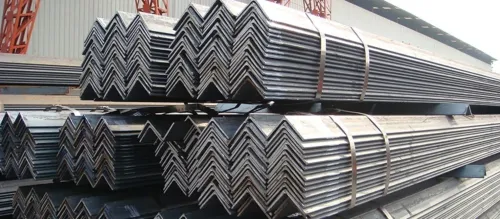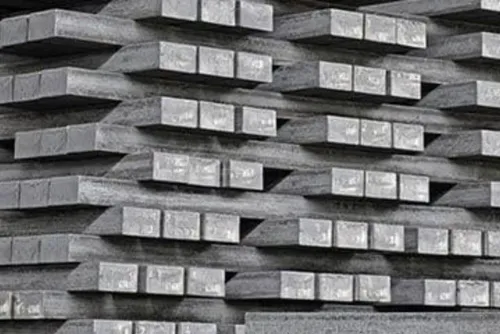

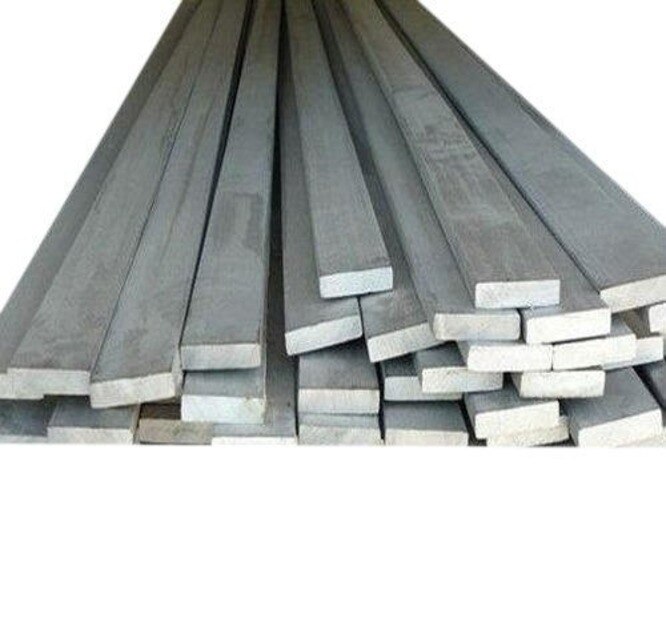
Choose a channel when the job needs depth, bending stiffness, or a stiffened frame member; choose an MS flat when you need a strip for a cleat, strap, gusset, shim, tab, or simple cut-and-weld part. By comparing load direction, unsupported length, dimensions, standards, weight, connection access, and fabrication effort, you can specify the section without relying on a vague term such as “100 channel” or “flat bar.”
Key takeaways
- Choose channels when depth and strong-axis stiffness control beam deflection.
- Match section dimensions to the drawing before comparing price per kilogram.
- Specify grade, standard, mill documents, heat number, and inspection requirements.
- Compare weld length, cutting effort, scrap, handling, and usable yield.
Choose the section from the load path, not the price per kilogram
Choose a channel when the load travels along a beam, stringer, rail, bracket, or edge member and bending stiffness matters more than minimum mass. Its greater depth places steel farther from the neutral axis, giving substantially higher strong-axis stiffness than a flat of similar weight; that helps control deflection over an unsupported span.
| Choice | Best load path | Main checks before selection |
|---|---|---|
| Hot-rolled channel | Beam, stiffened frame, rail, edge member, or bracket carrying bending or torsion | Strong-axis and weak-axis bending, shear, lateral-torsional buckling, local buckling, connection eccentricity, and weld access |
| MS flat | Strap, cleat, gusset, tab, shim, base plate, stiffener, or simple cut-and-weld part | Width, thickness, unsupported width, net section at bolt holes, weld length, and local buckling in compression |
| Built-up member | A section assembled from flats where the drawing requires a custom width or depth | Plate slenderness, weld sequence, distortion, effective lengths, and load transfer between components |
Choose an MS flat when the force is mainly axial, the piece works as a connection component, or you need easy cutting, drilling, stacking, and close access for welding. A wide, thin flat can buckle as a compression plate, while a channel can become awkward where its web and flanges block the torch or electrode.
For channels or ms flats for steel fabricators in mumbai, specify the actual section: ISMC, ISLC, parallel-flange, or cold-formed lipped channel—not merely “channel.” Compare channels or ms flats by load direction, span, clearance, connection detail, and IS 800:2007 checks, not price per kilogram.
Match channel geometry and flat dimensions to the drawing
Before ordering, match the drawing’s exact section designation, not a description such as “100 channel.” An Indian hot-rolled ISMC or ISLC section, a parallel-flange channel, and a cold-formed lipped channel can share a nominal depth while differing in flange width, web thickness, corner radius, mass, tolerances, and design properties.
| Section type | Compare on the drawing and quotation | Risk if mismatched |
|---|---|---|
| Hot-rolled channel | ISMC or ISLC designation, depth, flange width, web thickness, mass per metre, and IS 808 reference | The member may not fit plates, brackets, or calculated clearances |
| Parallel-flange channel | Exact series, depth, flange width, thickness, radius, and mass per metre | A different flange shape changes connection and buckling behaviour |
| Cold-formed lipped channel | Overall depth, flange and lip widths, thickness, bend radii, and coating or finish | Thin elements can buckle or distort during welding |
| MS flat | Width, thickness, cut length, straightness, and hole or notch locations | A nominal “flat bar” may be too narrow, thin, or short |
For steel sections for fabrication, compare these details before releasing the purchase order:
- Confirm the channel’s orientation, clear span, unsupported length, and bending axis; rotating it changes stiffness and connection access.
- Check the flat’s width-to-thickness ratio where it acts as a compression flange, gusset, stiffener, or unsupported plate.
- Show weld size, effective length, intermittent or continuous pattern, electrode or torch access, and weld sequence. A channel web can block access and cause incomplete welds or distortion.
- Match overall length, mitre angles, slots, bolt holes, end returns, and trimming allowance to the fabrication drawing, not just the calculated member length.
Use the correct grade, standard, and design checks
Confirm suitability from the design load, not from mass per metre. State the governing steel grade, section standard, dimensions, and design code on the drawing or purchase specification.
For hot-rolled Indian sections, identify a channel as ISMC, ISLC, or another exact designation under IS 808; “100 channel” is incomplete because parallel-flange and cold-formed lipped channels have different properties.
Check the selection against:
- Steel grade and toughness requirements under IS 2062, including the specified grade such as E250 or E350.
- Channel depth, flange width, web thickness, root radius, mass per metre, and section properties against the IS 808 designation.
- MS flat width, thickness, cut length, and allowable dimensional or mass tolerances under the applicable product standard, commonly IS 1852 for rolled products.
- IS 800:2007 checks for axial capacity, bending about the loaded axis, shear, local buckling, overall slenderness, and lateral-torsional buckling.
- Unsupported length, restraint, torsion, bearing, holes, and connection eccentricity; a channel can twist when its load does not pass through the shear centre.
- Weld size, effective length, access, sequence, and distortion control where a flat joins the channel web or flange.
For channels for steel fabricators in Mumbai, require written approval before substituting IS 808 or IS 2062 with EN 10279, ASTM A6, or ASTM A36-related requirements. Confirm any equivalence against the project specification, because matching yield strength alone does not prove matching geometry, tolerances, weldability, or design capacity.
Build a purchase order that Mumbai fabricators can inspect and trace
Require a purchase order and delivery pack that let you identify every piece, verify its dimensions, and connect it to the steel test results after cutting. This is the minimum control needed for ms flats for fabricators in mumbai and channel orders.
1. State the exact designation: ISMC, ISLC, parallel-flange channel, or cold-formed lipped channel. For flats, state width, thickness, cut length, and whether the product is hot-rolled or cut from plate.
2. Name the governing standard and grade, such as IS 808 with IS 2062, EN 10279, or an ASTM specification. Write any approved equivalence into the order; do not leave substitution to the supplier.
3. Require the heat or cast number, manufacturer’s test certificate, chemical analysis, yield strength, tensile strength, elongation, and impact test result where the specification requires it.
4. Specify channel depth, flange width, web and flange thickness, corner radius, mass per metre, and permissible mass and dimensional tolerances. For flats, add width and thickness tolerances.
5. Set length tolerance, straightness limit, edge condition, and acceptable camber. State whether mill scale, staining, or a prepared surface is acceptable.
6. Define acceptance defects: reject cracks, seams, laminations, deep pitting, and excessive section loss. Require ultrasonic testing when laminations could compromise welded connections.
7. Require bundles, cut pieces, and packing lists to retain the original heat number. Mark every cut piece before fabrication; otherwise the installed steel cannot be traced to its certificate.
Bhartiya Metacast Private Limited can be included in a comparison only after its quotation records these same technical fields, rather than relying on a generic “MS channel” description.
Related product
 | Channels Channels (Mild Steel Channels) – Bhartiya Metacast Private Limited Bhartiya Metacast Private Limited offers high-quality MS Channels (Mild Steel Channels)... |
Compare cutting, welding, weight, and usable yield before deciding
A channel usually reduces fabrication effort when a frame, bracket, rail, or edge member needs bending stiffness over a span. An MS flat uses less preparation for straps, cleats, gussets, tabs, shims, and simple cut-and-weld parts, but a wide thin flat can buckle when compression acts across its unsupported width.
| Option | Cutting and welding | Weight and usable yield |
|---|---|---|
| Channel | Requires square cuts, coping or notching, and planned weld access around the web and flanges. Poor access can increase weld length, distortion, and fit-up time. | Gives greater strong-axis stiffness for its mass, so it can replace a heavier built-up flat arrangement. Notched ends and short offcuts can reduce usable yield. |
| MS flat | Cuts quickly and accepts straightforward fillet welds, holes, and edge preparation. It suits repetitive parts, but several flats may need extra welding to create equivalent stiffness. | Often produces better yield for plates, straps, and small fittings because nesting is simple. A flat sized only by weight can become too thick, too wide, or too flexible for the duty. |
Compare span, load direction, bending axis, unsupported length, torsion, and clearance before ordering steel sections for fabrication. Check whether the member needs buckling resistance under IS 800:2007.
A channel’s higher mass per metre is waste if its geometry cannot be welded or fitted; a cheaper flat is false economy if it needs stiffeners, extra welds, or replacement after distortion.
Frequently asked questions
When should you choose channels instead of MS flats?
Choose channels when the load travels along a beam, stringer, rail, bracket, or edge member and bending stiffness matters over an unsupported span.
How should fabricators match channels or MS flats to a drawing?
Check the drawing’s section designation, depth, flange or flat width, thickness, length, orientation, holes, welds, and connection details before ordering.
What should a purchase order include for traceability?
State the section dimensions, steel grade, standard, quantity, cut lengths, tolerances, test documents, heat or batch number, marking, and inspection requirements.
What costs should you compare beyond the steel price?
Compare cutting time, weld length, handling, straightening, end trimming, scrap, transport weight, and usable yield for the completed assembly.