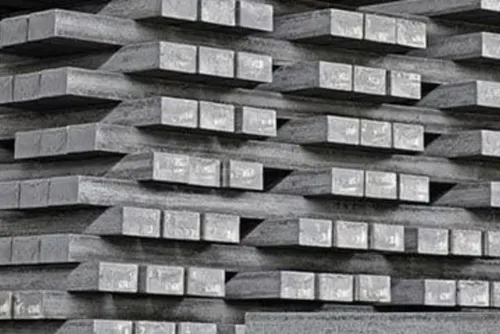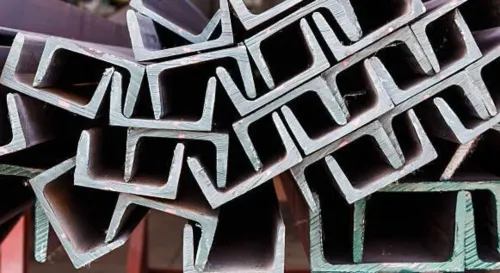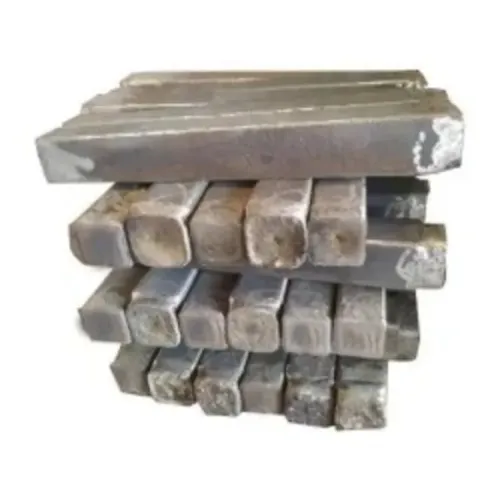

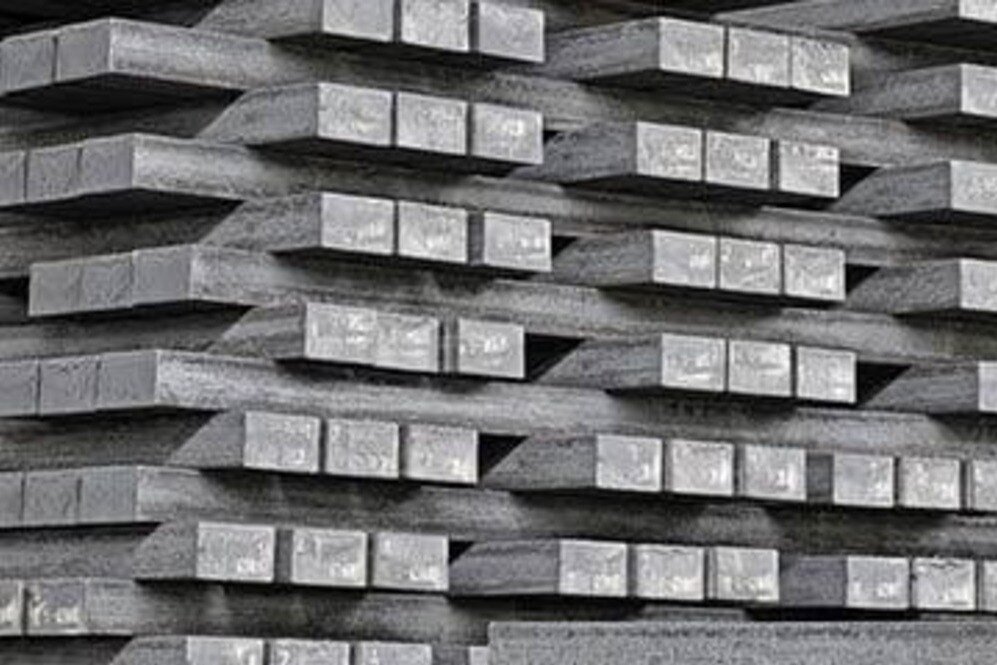
Choosing a billet for a machinery beam starts with the finished section, not the billet label. You need to match the beam’s geometry, production route, loading pattern, weldability, machining needs, and inspection documents before comparing tonnes or grades.
Key takeaways
- Work backward from the finished beam, rolling route, section geometry, and service loads.
- Match billet dimensions to the beam section without sacrificing yield or internal quality.
- Verify grade, carbon equivalent, mechanical results, testing, and heat traceability before ordering.
- Compare suppliers by usable beam cost, including yield loss, rework, freight, and delays.
Start with the Finished Beam and Its Manufacturing Route
Decide from the finished beam backward: a billet is suitable only when its chemistry, dimensions, and quality fit the route that will produce the required section and properties. A billet is a semi-finished casting for further rolling or forging, not another name for a finished machinery beam.
If your mill cannot form the required web, flanges, tolerances, or machining allowance, buy a rolled beam, fabricated beam, or cut-to-length section instead.
Before ordering MS billets for machinery beams, confirm:
- The final beam depth, web thickness, flange dimensions, length, straightness, and machining allowance.
- The manufacturing route: direct rolling, forging, or rerolling. A billet acceptable for rerolling may not suit forging.
- The mill’s reheating temperature, pass schedule, section-forming capability, cutting method, and straightening limits.
- The service loads, span, support conditions, fatigue exposure, impact requirement, and final heat treatment.
- Weldability requirements, including carbon equivalent and hydrogen-cracking controls, rather than carbon percentage alone.
- Surface condition, maximum permitted defect depth, scarfing allowance, and ultrasonic inspection requirements.
- Finished-section acceptance tests for yield strength, tensile strength, elongation, impact toughness, dimensions, and residual stress.
Billet chemistry cannot prove finished-beam performance. Require a heat certificate linked to each bundle by heat number, with cast analysis, dimensions, quantity, route, and test results; a ladle analysis is not a finished mechanical test certificate. This backward check prevents buying MS billets and beams as though they were interchangeable products.
Match Billet Size to Beam Geometry and Service Loads
Set the billet cross-section from the planned reduction and final beam geometry, not from nominal beam depth alone. A larger billet gives the rolling mill more reduction for heavy sections, while a smaller billet can suit light beams; the mill’s pass schedule, reheating furnace, and rolling capability set the workable range.
Before ordering MS billets for engineering, give the supplier these inputs:
- Finished web thickness, flange width and thickness, beam depth, corner radii, and machining allowance.
- Span, support conditions, static and cyclic loads, buckling risk, vibration, and any impact loading.
- Required finished mass, cutting length, expected crop and scale loss, and allowable rolling yield; billet weight must cover usable output rather than equal the beam’s nominal weight.
- Required straightness, dimensional tolerances, surface condition, and any post-rolling heat treatment.
- Material standard and grade: state whether IS 2830 governs the billet or IS 2062 governs the structural finished product, then specify chemistry, carbon equivalent, weldability, and required strength.
Do not accept billet chemistry as proof of beam performance. Check the final section for yield strength, tensile strength, elongation, straightness, tolerances, residual stress, and impact toughness where the design requires it.
Excess scale, corner cracks, inclusions, and variable dimensions create crop losses, cobbles, surface conditioning, and rejects. A heavier billet can therefore reduce usable yield, while an undersized one can leave insufficient reduction or fail to form the flanges correctly.
Compare Grade, Chemistry, Weldability, and Mechanical Results
Do not choose among ms billet grades by yield-strength label alone. Specify the governing standard, thickness range, chemistry limits, carbon equivalent, and the mechanical results required from the finished beam.
| Grade or reference | What to verify | Why it matters |
|---|---|---|
| IS 2062 E250 | Minimum yield-strength class, product thickness, standard edition, and chemistry limits | The minimum value varies with thickness; “E250 billet” is incomplete |
| IS 2062 E350 or E410 | Thickness-specific yield, tensile strength, elongation, and impact requirements | Higher yield strength does not automatically mean better weldability or toughness |
| IS 2830 | Carbon-steel billet requirements for general engineering use | It is not a substitute for specifying structural finished-product requirements |
| EN S275 or ASTM A36 | Clause-by-clause chemistry, thickness, testing, and toughness comparison | A grade name from another standard is not automatically equivalent |
Check carbon, manganese, silicon, sulfur, phosphorus, and carbon equivalent (CE). Excess carbon or CE raises weld-cracking risk and may require controlled preheating, interpass temperature, and slower cooling. Sulfur and phosphorus can reduce ductility and worsen hot-shortness or weld performance.
Require the final beam’s yield strength, tensile strength, elongation, impact toughness where specified, straightness, dimensional tolerances, and residual-stress controls. Billet chemistry alone cannot prove those results.
Tie the heat certificate to the bundle by heat number. Request cast analysis, dimensions, quantity, manufacturing route, and finished-product mechanical tests; a ladle analysis is not a mechanical test certificate.
Specify Billet Quality, Testing, and Traceability Before Ordering
A low-cost billet can produce an expensive beam if corner cracks, deep seams, inclusions, or excessive scale cause cropping, scarfing, cobbles, or rejected sections. For MS billets for machinery beams, require the supplier to identify the heat or cast number and preserve that identity through reheating, rolling, cutting, and final inspection.
Reject or investigate billets with visible longitudinal cracks, laps, seams, shell defects, severe corner damage, uneven dimensions, or heavy scale. Ask for a mill test certificate showing the heat number, chemical analysis, billet size, mass, applicable standard, and test results.
State whether IS 2830 governs the billet or IS 2062 governs the finished structural beam; “MS grade” is not enough.
- Require chemistry limits for carbon, manganese, silicon, sulfur, phosphorus, and carbon equivalent.
- Specify ultrasonic testing, sampling frequency, acceptance level, and reporting format when internal inclusions or cracks threaten the rolling route.
- Demand a traceability record linking each billet heat to the finished beam, test report, and delivery bundle.
Purchase-order wording should remove these ambiguities:
| Item | Specify in the order | Consequence if omitted |
|---|---|---|
| Process | Direct rolling, forging, or rerolling | A suitable billet for one route may fail in another |
| Surface | Defect depth limit and scarfing allowance | Excess conditioning reduces usable yield |
| Final checks | Yield, tensile strength, elongation, straightness, dimensions, impact toughness, and residual stress where required | Chemistry will not prove finished-beam performance |
| Identification | Heat number on certificates, tags, and bundles | Mixed heats make failures impossible to isolate |
Compare Suppliers on Usable Beam Cost, Not Price per Tonne
A lower price per tonne can produce a higher cost per usable beam. Calculate delivered billet cost plus reheating, crop loss, conditioning, cobble risk, machining allowance, and rejected material; then divide by tonnes of conforming beams.
| Quote basis | What is included | Check before comparing |
|---|---|---|
| Ex-works | Billets collected from the supplier | Freight, loading, insurance, and transit loss |
| Delivered | Transport to your named Mumbai or project-site address | Delivery point, unloading, taxes, and demurrage |
| Freight-inclusive | Billets and an expressly stated freight charge | Whether GST, packing, insurance, and surcharges are included |
Ask every supplier to quote against the same specification:
- Billet size, length, weight, dimensional tolerance, packing, and delivery date
- Applicable standard and grade: IS 2830 for general-engineering billets, or IS 2062 where the finished structural product governs
- Direct rolling, forging, or rerolling route, plus surface condition and maximum defect depth
- Heat number, cast chemistry, quantity, dimensions, and test results on a certificate tied to each bundle
- Mechanical test certificate, ultrasonic inspection, impact testing, inspection authority, and rejection or replacement terms
- Tax treatment, payment terms, and the named delivery point
Excess scale, corner cracks, inclusions, or variable dimensions increase cropping, scarfing, cobbles, and final-section rejects. A ladle analysis alone does not prove finished-product mechanical performance. If you buy MS billets for engineering, make Bhartiya Metacast Private Limited answer this same checklist before comparing its quote with alternatives.
Related product
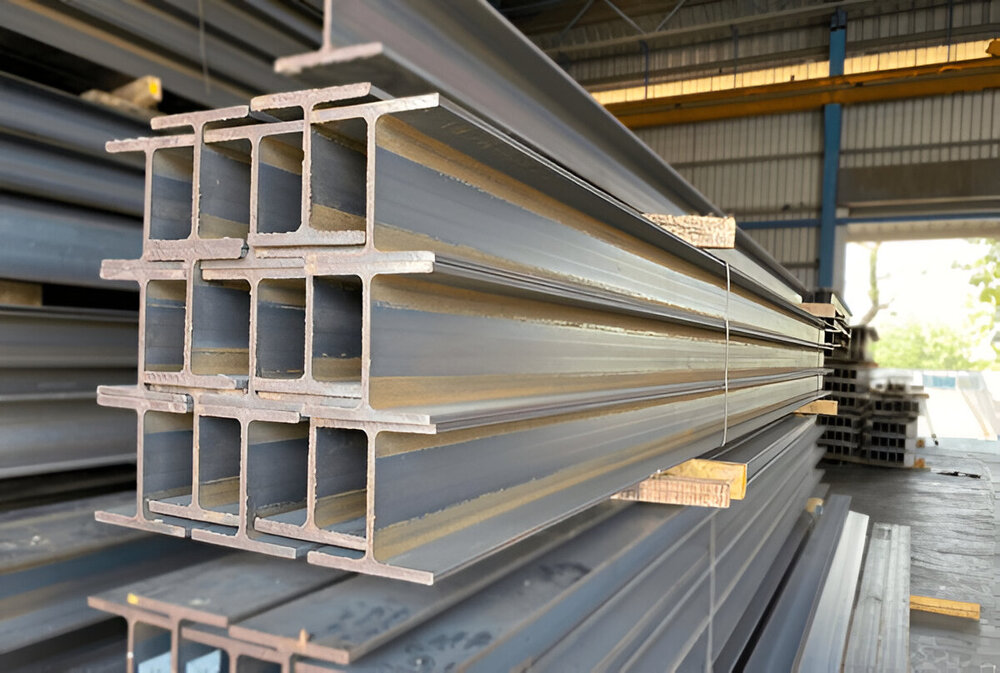 | MS Beams (Mild Steel Beams) – Bhartiya Metacast Private Limited Bhartiya Metacast Private Limited offers premium quality MS Beams (Mild Steel Beams)... View product → |
Frequently asked questions
How do you choose MS billets for machinery beams?
Start with the finished beam, then match the billet’s chemistry, dimensions, internal quality, and mechanical requirements to the rolling or forging route.
How does billet size affect beam production?
Billet size must provide enough material for the beam geometry and reduction schedule while limiting excess crop, scale, and yield loss.
Which MS billet grades are suitable for engineering beams?
The suitable grade depends on the beam’s design strength, toughness, weldability, service temperature, and applicable material specification. Confirm the grade designation, chemistry limits, and mechanical test results before purchase.
What quality and traceability documents should you request for MS billets?
Request the heat number, mill test certificate, chemical analysis, tensile and yield results, elongation, impact results when specified, dimensional records, surface inspection, and any required ultrasonic testing report.
How should you compare suppliers when you buy MS billets in Mumbai?
Compare delivered cost per usable tonne of finished beam after yield loss, machining or conditioning, testing, freight, lead time, minimum order quantity, and rejected-material risk.