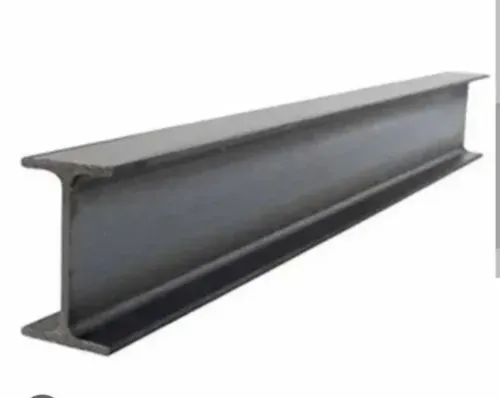

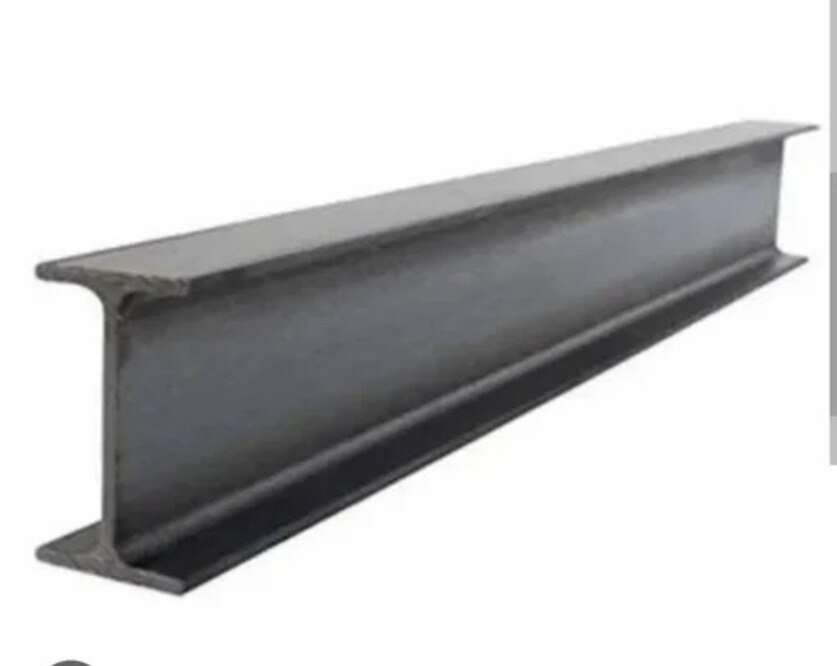
An MS beam can appear overloaded when the real fault is an eccentric load, a shifting support, a damaged connection, local web bearing, or torsion caused by an offset reaction. By the end, you will be able to separate those causes, identify when a rolled section is an appropriate repair, and assemble the specifications and installation controls an engineer needs before selecting one.
Key takeaways
- Check torsion, lateral bending, web crippling, and flange distortion before upsizing the beam.
- Align supplementary steel with the actual load path, not just the visible deformation.
- Verify access, connection stiffness, bearing length, and temporary support before choosing a repair.
- Collect section size, grade, span, loads, supports, and connection details before procurement.
What an uneven load problem looks like in an MS beam
Twist or one-sided deformation under a known load points first to an uneven-load problem, not automatically to an undersized MS beam. An eccentric point load, unequal support reaction, offset opening, or removed wall can create torsion, lateral bending, local flange distortion, web crippling, or diagonal web buckling even when the total load appears acceptable.
- Uneven loading: one flange is displaced more than the other, the beam twists toward the load, the web shows diagonal buckling, or one support has a clear bearing dent while the opposite support has a gap.
- Corrosion: rust scale, pitting, section loss, and reduced thickness follow exposed surfaces or drainage paths; the damage remains visible after the load is removed.
- Excessive deflection: the beam forms a smooth sag along its span without a concentrated bearing dent, sudden twist, or localized web buckle.
- Support movement: survey levels, bearing gaps, cracked masonry or concrete, and shifted seats show that a support has settled, rotated, or moved sideways.
- Fabrication error: incorrect camber, warped flanges, misaligned holes, or a built-in twist exists before service loading and repeats along the member.
- Connection damage: cracked welds, elongated bolt holes, slipped bolts, torn gusset plates, or separated bearing surfaces occur at the joint.
Record the actual load position, support contact, deflected shape, flange and web thickness, and connection condition before unloading or jacking. These observations separate MS beam load problems from geometry or support defects; they also show whether a rolled section could enter the load path safely.
When a rolled section can correct the governing failure
A supplementary rolled section corrects the governing failure only when it joins the existing load path and addresses the actual limit state. A heavier member does not fix a settled support, missing bearing, cracked weld, or eccentric load that still creates torsion.
Check the repair in this order:
- Measure applied loads, point-load locations, load centroid, span, restraints, support reactions, and any load transferred around an opening or removed wall.
- Inspect the supports and connections for unequal contact, seat damage, bolt slip, weld cracking, column distress, and foundation movement.
- Model shear, bending moment, deflection, torsion, lateral bending, lateral-torsional buckling, web crippling, web bearing, flange local buckling, and bearing length.
- Check the complete force path: supplementary member, bolts or welds, end plate, seat, supporting beam or column, and foundation.
- Establish temporary shoring, jacking forces, existing load, residual capacity, and the sequence for transferring load before unloading or replacing anything.
| Finding | Why a rolled section may or may not solve it | Governing action |
|---|---|---|
| Eccentric point load | The section needs restraint and connections that transmit torsion and lateral bending, not vertical load alone. | Design member and connections together. |
| Unequal support reactions | Settlement or an unintended support location remains active after adding steel. | Correct support geometry or add a designed transfer member. |
| Local web bearing or crippling | A short bearing length can fail before the beam reaches bending capacity. | Add bearing or a stiffener with a verified load path. |
| Connection failure | New steel remains lightly loaded if gaps, slip, or flexible attachments prevent transfer. | Design and sequence the connection. |
That is the test for rolled steel sections for MS beam load problems and rolled sections for structural repair.
How to make a new or supplementary section share the load
A sister beam, channel, angle, plate, tee, or spreader receives load only through a designed load path. Rolled sections for structural repair are not a substitute for temporary works: establish existing loads, reactions, damage, residual capacity, and the transfer sequence before unloading or jacking the MS beam.
1. Survey the beam, supports, connections, bearing lengths, gaps, corrosion, twist, and lateral restraints. Calculate vertical shear, bending, torsion, lateral bending, deflection, web bearing, web crippling, and connection forces from the actual load positions and eccentricities.
2. Install temporary shores or jacks sized for the calculated reaction, with spreader plates on adequate supports. Jack only to the specified displacement; uncontrolled lifting can redistribute load suddenly into adjacent beams, columns, or masonry.
3. Prepare contact surfaces. Remove loose scale, square damaged edges, and close designed gaps with steel packing or non-shrink grout. Do not assume a touching flange transfers force across an uneven or painted surface.
4. Connect the new member for the governing force: use bolts with checked slip, bearing, tear-out, and block-shear resistance, or continuous fillet or groove welds sized for the force and access.
Extend end connections to supports or existing load-introduction points, and provide web stiffeners, flange restraints, or a transverse spreader where local bearing or torsion governs.
5. Transfer load gradually through the jacks or specified tightening sequence, then verify bearing contact, bolt installation, weld quality, deflection, and residual gaps before removing temporary works. A connection that fits but remains flexible or slips has not made the new section structural.
Recheck the supporting column, foundation, seat, and original beam connection; the weakest part of the complete path governs.
Which repair option fits the access, stiffness, and load-path constraints
Choose the repair that changes the faulty load path, not simply the one with the most steel. Compare rolled steel sections and MS beams against span, supports, factored and service loads, load position, eccentricity, lateral restraint, deflection limit, fire exposure, corrosion allowance, grade and connection capacity.
| Option | Best fit | Main constraint |
|---|---|---|
| Sister MS beam | Adds global bending and stiffness beside the existing beam | It receives load only through designed, tight connections and controlled load transfer |
| Paired channels | Fits restricted depth or wraps around services and existing members | Check slip, torsion, separation, bracing and connection forces |
| Welded plates | Strengthens a local flange or web weakness | Welding causes access, distortion, residual-stress and inspection problems; it rarely fixes a global load path |
| Angles | Reinforces a flange, web, bearing zone or connection locally | Limited bending capacity and poor effectiveness across a long span |
| Transverse spreader | Distributes an eccentric point load to several beams | The receiving beams, connections and supporting structure must carry the redistributed reactions |
| New support | Corrects excessive span, settlement or an unintended support location | Foundation, bearing, temporary works and reaction transfer become part of the repair |
| Replacement beam | Removes severe damage or fundamentally inadequate geometry | Requires verified unloading, temporary support and full connection replacement |
For an offset load, check torsion and lateral bending alongside shear, moment, deflection, lateral-torsional buckling, web crippling and bearing. A larger section is not a solution if gaps, flexible joints or inadequate bearing leave it lightly loaded. Assess existing reactions and residual capacity before jacking, unloading or cutting.
What steel beam specifications must be collected before procurement
A request that says “MS beam, 6 m, heavier than the existing member” is not enough. Collect these steel beam specifications before comparing rolled steel sections and MS beams:
| Field | Record before ordering | Why it matters |
|---|---|---|
| Section geometry | IS 808 designation, depth, flange width and thickness, web thickness, radius, length and mass per metre | Section properties control bending, shear, torsion, bearing and lateral-torsional buckling |
| Steel grade | IS 2062 grade, such as E250 or E350, plus weldability requirements | Grade changes yield strength and design resistance; it does not correct a poor load path |
| Dimensional tolerance | IS 1852 tolerance limits for depth, width, thickness, straightness and camber | Excess variation can create unequal bearing or prevent a sister beam from fitting |
| Tests and documents | Mill test certificate, heat number, chemical analysis, tensile results and Charpy V-notch impact results when toughness is specified | Certificates let you verify the supplied steel rather than relying on nominal grade |
| Connections | Bolt diameter and grade, weld size and length, splice position, bearing length, holes, stiffeners and lateral restraints | A stronger section still fails if its connection or web bearing zone cannot transfer the force |
| Project actions | Span, supports, factored and service loads, load positions, eccentricity, reactions, corrosion allowance, fire rating and allowable deflection | These inputs determine whether bending, torsion, web crippling or deflection governs |
Give Bhartiya Metacast Private Limited this complete schedule when requesting a quotation, so the offered section can be checked against the design rather than selected by weight alone.
Related products
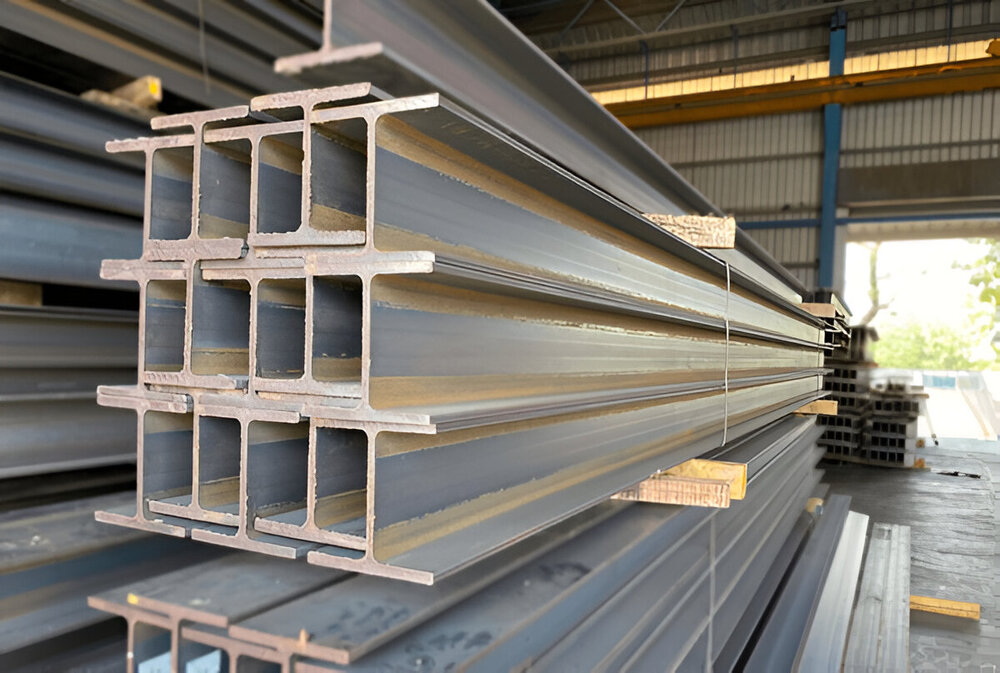 | MS Beams (Mild Steel Beams) – Bhartiya Metacast Private Limited Bhartiya Metacast Private Limited offers premium quality MS Beams (Mild Steel Beams)... View product → |
 | MS Angles We offer steel angles that are made with very close tolerances and exact mechanical properties. Available in smooth and continuous surface finishes. View product → |
Frequently asked questions
What does an uneven load problem look like in an MS beam?
Twist, one-sided deflection, flange distortion, web crippling, or diagonal web buckling can indicate eccentric loading, unequal reactions, an offset opening, or a changed support condition.
When can a rolled steel section correct the governing failure?
A rolled section helps when its geometry, orientation, and connections address the controlling failure, such as lateral bending, torsion, local flange bending, web crippling, or inadequate section stiffness.
How can a new or supplementary section share the beam load?
Provide a continuous load path through bearing plates, stiffeners, bolted or welded connections, and sufficient contact length; temporary support may be needed before the connection transfers load.
How do you choose a rolled section for structural repair?
Compare available access with the required stiffness, strength, connection space, fire protection, and installation sequence. A sister beam, channel, angle, plate assembly, or replacement section suits different constraints.
Which steel beam specifications must be collected before procurement?
Record section designation and dimensions, steel grade, span, support and bearing details, factored and service loads, load positions, restraint conditions, connection requirements, corrosion allowance, finish, and required length.
Related products
 | Channels Channels (Mild Steel Channels) – Bhartiya Metacast Private Limited Bhartiya Metacast Private Limited offers high-quality MS Channels (Mild Steel Channels)... |
 | Mild Steel Angles (MS Angles) Mild Steel Angles (MS Angles) – Bhartiya Metacast Private Limited Bhartiya Metacast Private Limited offers premium-quality Mild Steel Angles (MS... View product → |
 | RSJ Poles (Rolled Steel Joist Poles) – Bhartiya Metacast Private Limited Bhartiya Metacast Private Limited manufactures and supplies high-quality RSJ Poles... View product → |
 | Tee Bars Stainless Steel Tee Bars – Bhartiya Metacast Private Limited Bhartiya Metacast Private Limited offers high-quality Stainless Steel Tee Bars designed... View product → |